
A People's History of the World by Chris Harman - Book Summary
Introduction
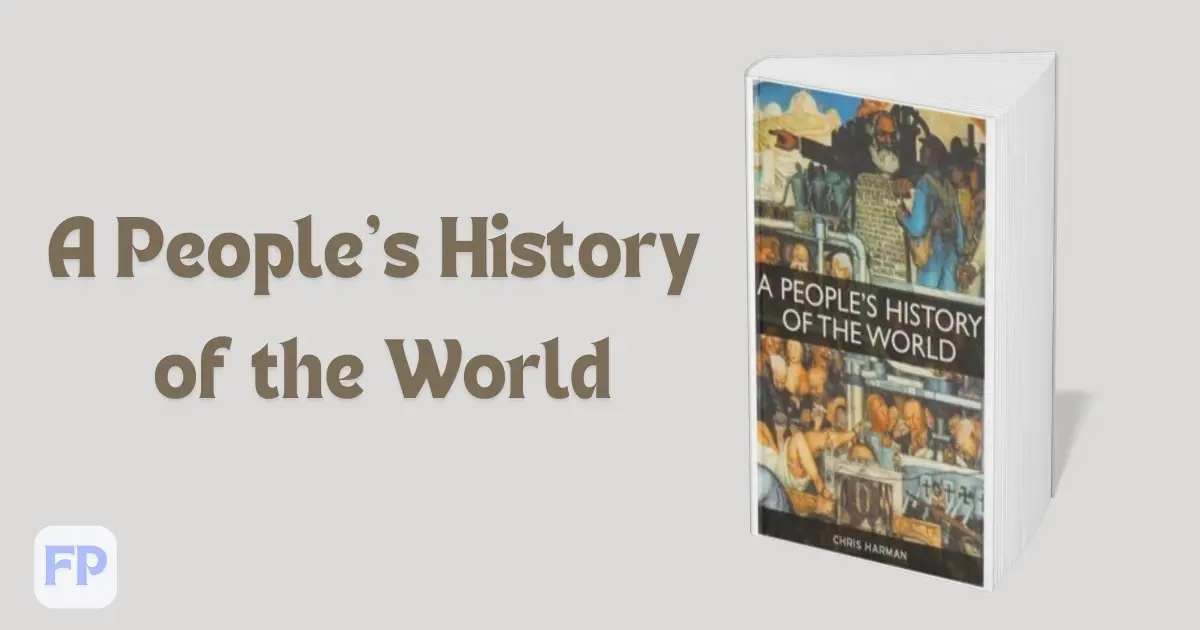
"A People's History of the World" by Chris Harman is an ambitious undertaking that reimagines the narrative of global history from the perspective of the common people rather than the traditional focus on leaders, empires, and nation-states. Spanning from prehistoric times to the modern era, Harman's work is a powerful examination of how ordinary people have shaped the course of history through their struggles, achievements, and resilience. The book offers readers a panoramic view of humanity's collective journey, emphasizing the social, economic, and political forces that have influenced human history across continents and cultures.
Overview
Chris Harman, a renowned British journalist and historian, presents a compelling argument in "A People's History of the World" for examining historical events through the lens of the oppressed and marginalized. Through this approach, Harman seeks to highlight how the struggles for power, resources, and justice have often driven historical change more than the actions of kings and conquerors.
Main Themes
Social Struggle and Resistance
One of the central themes in Harman's narrative is the continuous struggle for justice, equality, and power by the oppressed. From the peasant revolts in medieval Europe to the modern labor movements, Harman underscores the fundamental role of ordinary people in fighting against exploitation and tyranny. This theme is woven throughout the book, demonstrating how the resistance of the masses has often been the catalyst for significant societal changes.
Economic Forces
Harman places considerable emphasis on the role of economic forces in shaping the historical trajectory of societies. He examines how the development of agricultural practices, the rise of capitalism, and industrialization have transformed human societies and fueled both prosperity and conflict. By highlighting the economic underpinnings of historical events, Harman provides insight into the systemic inequalities and injustices that have persisted over time.
Revolutionary Change
Revolution is another key theme of the book, as Harman explores various revolutionary movements that have sought to overthrow oppressive systems and establish more equitable societies. From the French Revolution to the decolonization movements in Africa and Asia, these events are portrayed not merely as political upheavals but as profound social transformations initiated by popular demand for change.
Global Interconnections
Harman's narrative is characterized by its global perspective, emphasizing the interconnectedness of human societies. He discusses how trade, migration, and colonization have created complex networks of influence and exchange, shaping the development of cultures and civilizations across the world. This global approach helps readers appreciate the multifaceted nature of historical progress and the shared experiences of diverse peoples.
Key Historical Epochs
Prehistoric and Ancient Societies
Harman begins by exploring early human societies, emphasizing the communal nature of prehistoric life and the transition to agriculture, which laid the foundations for class society and the state. The rise of ancient civilizations like Mesopotamia, Egypt, and China are examined through the lenses of production and social hierarchy, highlighting how social structures became more complex and stratified.
Medieval World and Feudalism
The medieval period is depicted as a time of significant social change, marked by feudal exploitation and popular resistance. Harman delves into the dynamics of medieval European society, exploring peasant uprisings, such as the English Peasants' Revolt of 1381, which reflected widespread discontent with feudal oppression.
The Age of Revolutions
The book provides a detailed account of the transformative revolutions from the 17th to the 19th centuries, focusing on the political and social upheavals of the English Civil War, the American Revolution, and the French Revolution. These events are presented as results of economic tensions and popular movements challenging autocratic regimes and seeking greater social justice.
Industrialization and Capitalist Expansion
Harman's discussion of the Industrial Revolution examines the profound changes in production and social relations it engendered. He highlights the harsh working conditions and the rise of the working class as a force advocating for reform and revolution. This period also sees the expansion of European imperialism, driven by capitalist interests seeking new markets and resources.
20th Century Turmoil and Transformation
The 20th century is portrayed as a period of intense conflict and transformation, shaped by two world wars, decolonization, and the rise of socialism. Harman examines the Russian Revolution, the struggles for independence in colonized nations, and the expansion of neoliberalism. He assesses the varying successes and failures of these movements in achieving social and economic justice.
Conclusion
In "A People's History of the World," Chris Harman delivers an insightful and provocative account of history that challenges traditional narratives focused on elites and institutions. By foregrounding the experiences and struggles of ordinary people, Harman offers a more inclusive and nuanced understanding of the past. His work invites readers to reconsider the forces that drive historical change and to recognize the enduring influence of social movements in shaping our world.
Ultimately, Harman's history reminds us that the story of humanity is not just one of conquest and domination but also of resilience, solidarity, and the relentless pursuit of a fairer and more just world. Through this expansive and empathetic account, readers are encouraged to reflect on the current struggles and the potential for collective action to forge a better future for all.