
Astrophysics for People in a Hurry by Neil deGrasse Tyson - Summary
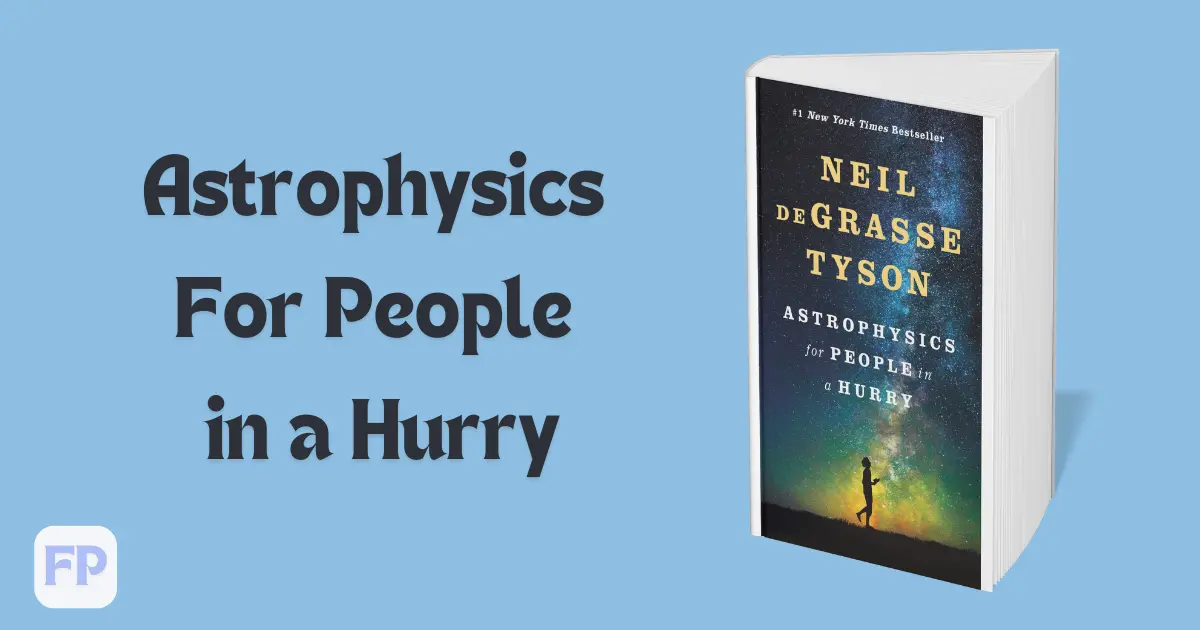
Introduction to Astrophysics for People in a Hurry
In "Astrophysics for People in a Hurry," renowned astrophysicist Neil deGrasse Tyson introduces the wonders of the universe for those who may lack the time or resource to dive deep into extensive studies. With his characteristic wit and a flair for simplifying complex ideas, Tyson takes readers on a journey through cosmology, exploring everything from the Big Bang to black holes. The book aims to enlighten and educate, providing an accessible way to understand the universe's mysteries and our place within it.
Main Themes
The Beauty of the Universe
Tyson’s love for the cosmos is evident throughout the book. He invites readers to appreciate the splendor of a universe governed by simple yet elegant laws. From the microscopic interactions in quantum physics to the vast elegance of galaxies, the book emphasizes the awe-inspiring nature of the cosmos, urging readers to look up from their busy lives and marvel at the stars.
The Science of Astrophysics
At its core, astrophysics is about understanding the universe and our place within it. Tyson presents fundamental concepts such as gravity, light, dark matter, and dark energy, breaking them down into bite-sized explanations. Through these, readers gain insights into how scientists unravel the secrets of the cosmos using empirical data and scientific reasoning.
Human Connection to the Universe
Tyson draws profound connections between the human experience and the cosmic realm. By illustrating how elemental components like carbon and oxygen found in our bodies are forged in stellar interiors, he emphasizes the shared origins of all matter. This perspective not only instills a sense of unity and kinship with the universe but also elevates the human experience to a cosmic scale.
Key Points
The Big Bang and Cosmic Evolution
Tyson begins by explaining the Big Bang Theory and how it accounts for the birth and evolution of the universe over billions of years. By describing the immediate aftermath of the Big Bang and the propagation of energy and matter, he provides a foundational understanding of cosmic evolution.
Expanding Universe
The concept of an ever-expanding universe is a pivotal aspect of the narrative. Tyson explains how Edwin Hubble’s discovery of redshifted galaxies provided evidence for this expansion, reshaping our understanding of the cosmos and leading to current models of the universe.
Dark Matter and Dark Energy
Astrophysicists confront a universe dominated by dark matter and dark energy, yet invisible and undetectable by conventional means. Tyson elucidates the importance of these mysterious entities in understanding the universe's structure and expansion dynamics, highlighting ongoing research efforts to uncover their nature.
Light and Electromagnetism
By delving into the role of light and the electromagnetic spectrum, Tyson uncovers how astrophysicists gather critical data about celestial objects. He breaks down the science of spectroscopy, explaining how the study of light leads to discoveries about chemical compositions, distances, and velocities of stars and galaxies.
Gravity and Relativity
Einstein's theory of General Relativity revolutionized the understanding of gravity. Tyson succinctly introduces the notion of spacetime and how massive objects warp the geometry around them, impacting the path of light and the motion of other bodies. This principle is essential in explaining phenomena like black holes and gravitational waves.
Black Holes and Extreme Conditions
Black holes embody the extreme frontier of modern physics. Tyson discusses their formation, the event horizon, and the singularity, contributing to current theories about the limits of space and time. He shares insights into how these cosmic objects influence their environment with powerful gravitational forces.
The Importance of Scientific Literacy
Throughout the book, Tyson encourages scientific literacy as a crucial component of contemporary life. Understanding basic astrophysical concepts enhances a person’s ability to engage with and critically assess issues affecting society and the planet. This argument further underscores the necessity of maintaining curiosity about the universe.
Conclusion
"Astrophysics for People in a Hurry" is a masterful introduction to the universe's most profound mysteries. Through Neil deGrasse Tyson's unique narrative voice and clear pedagogy, readers are granted insights into the workings of the universe that are both educational and inspiring. By bridging complex scientific principles with everyday life, Tyson reinforces that even in the bustle of modern existence, there's immense value in pausing to wonder about our cosmic origins. The book not only enriches our understanding of the astrophysical world but also cultivates an enduring appreciation for the magnificence of the universe, prompting us to cherish our connection with it.
By making complex ideas tangible and weaving them into relatable narratives, Tyson successfully underscores the significance of cultivating curiosity and nurturing a deeper connection to the cosmos. His work ignites a passion for astrophysics and emphasizes the unifying bonds between humans and the universe, encouraging readers to embrace their cosmic identity.