
Look to Windward by Iain M. Banks - Book Summary
Introduction
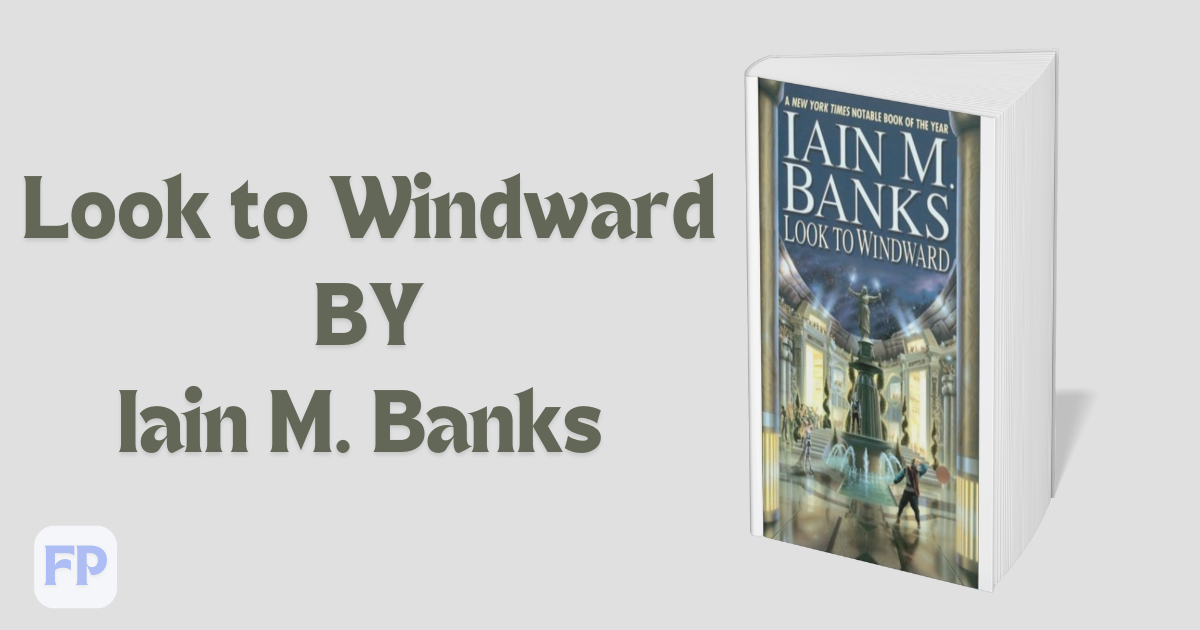
Look to Windward, a novel by Iain M. Banks, is part of the acclaimed Culture series. Published in 2000, it stands as a poignant exploration of themes such as war, memory, grief, and the moral responsibilities of advanced civilizations. Banks' storytelling is a blend of science fiction and philosophical inquiry, set in the vast and sophisticated universe of the Culture, a post-scarcity society characterized by its advanced technology and seemingly utopian lifestyle.
The narrative primarily revolves around two planets—Masaq', an Orbital belonging to the Culture, and Chel, whose people are recovering from the aftermath of a devastating civil war. The novel spans various perspectives, offering insights into the complexities of the universe Banks has crafted.
Main Themes
War and Its Aftermath
One of the central themes of Look to Windward is the devastating impact of war. Banks delves deep into the psyche of societies and individuals who have been scarred by conflict. The novel examines how war reshapes identities and social structures, leaving behind a long-lasting shadow that affects future generations.
Memory and Identity
Memory plays a crucial role in shaping one's identity in the novel. Characters grapple with personal and collective memories, which influence their decisions and interactions. This theme is intricately connected to the Culture’s practice of backing up consciousness, raising questions about the essence of selfhood and the implications of immortality.
Responsibility and Guilt
Banks poses ethical dilemmas about the responsibilities of a powerful civilization like the Culture. Through characters burdened with guilt over past actions and decisions, the novel explores how advanced beings justify or atone for the unintended consequences of their interventions.
The Nature of the Culture
As with other novels in the Culture series, Look to Windward scrutinizes the Culture's seemingly benevolent facade. The book raises questions about the costs of maintaining such a society and the moral ambiguities involved in its operations.
Key Points
The Plot
The Chelgrian Narrative
The story unfolds against the backdrop of the Chelgrian civil war, exacerbated by the Culture's interference. The Chelgrians are a complex species with a rigid caste system. The conflict, a direct result of external manipulation and internal strife, had catastrophic consequences, leading to the loss of billions of lives.
Central to this narrative is Major Quilan, a Chelgrian soldier tormented by the loss of his spouse, killed during the war. He is sent on a mission to the Culture's Masaq’ Orbital, under the guise of seeking cultural reconciliation but, unbeknownst to him, with a dangerous ulterior motive.
The Culture’s Perspective
On the Culture side, a sentient Artificial Intelligence known as Hub, which controls the Masaq’ Orbital, becomes instrumental in the unfolding events. Hub's interactions with Quilan and other characters provide insight into the Culture’s mindset and how it perceives its role in the galaxy.
One significant character is Ziller, a Chelgrian composer exiled to the Culture who represents a different perspective on his homeworld and its complex relationship with the Culture.
Character Analysis
Major Quilan
Quilan is a deeply traumatized individual, embodying the scars war leaves on a personal level. His mission to the Culture’s Orbital is driven by his grief but manipulated by his superiors, highlighting themes of agency and manipulation.
Hub
Hub is a representative of the Culture's advanced technology, with a personality developed to interact with and govern the multitude of beings in Masaq’ Orbital. Hub's duties underscore the themes of moral responsibility and ethical governance.
Ziller
Ziller is a dissident artist whose choice to live among the Culture points to the philosophical conflicts between individual freedom and societal norms. His interactions with Quilan and Hub reflect the broader dialogue of the book.
Conclusion
Look to Windward offers a rich tapestry of storytelling that delves into the philosophical implications of a technologically advanced society like the Culture. Banks uses his narrative to question how such civilizations deal with their power and the consequences of their actions. Through his intricate world-building and character development, he addresses timeless issues of war, guilt, and the pursuit of redemption.
The novel ultimately serves as both a cautionary tale and a meditation on the human—or sentient—condition, making it a significant work in the realm of science fiction. Its exploration of complex moral landscapes resonates with readers, providing a profound commentary on the responsibilities that come with power and progress.