
Play Nice by Rachel Harrison - Book Summary
Introduction
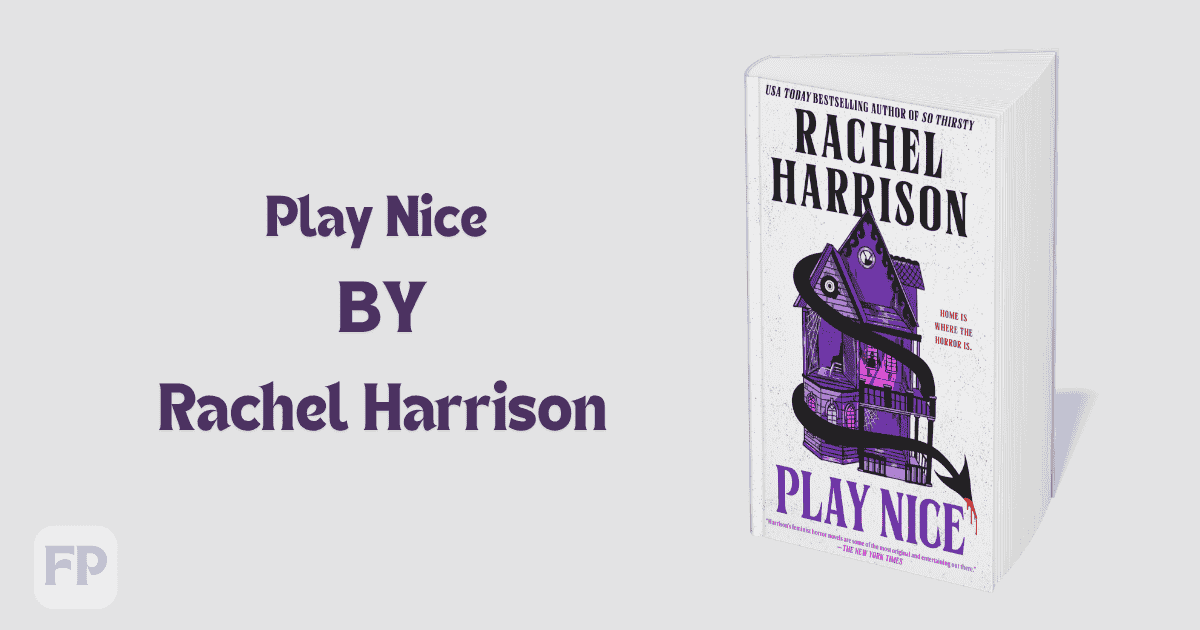
Rachel Harrison’s Play Nice is a sharp, unsettling, and darkly funny novel that blends psychological horror, domestic suspense, and supernatural unease into a story about motherhood, marriage, identity, and the terrifying limits of control. Known for writing horror that feels both intimate and emotionally raw, Harrison uses this novel to explore what happens when the desire to be a “good” wife, a “good” mother, and a “good” person starts to fracture under pressure. The result is a book that feels deeply human even as it grows increasingly eerie.
At its core, Play Nice is about the hidden violence inside ordinary life. Harrison takes familiar spaces—home, family routines, polite social expectations—and turns them into places of dread. Instead of relying only on obvious scares, she builds tension through relationships, emotional repression, and the gnawing fear that something is wrong long before anyone can name exactly what it is. This makes the novel especially effective for readers looking for modern horror fiction, women-centered psychological suspense, and character-driven supernatural stories.
What makes the book stand out is its emotional intelligence. Harrison is not simply interested in monsters, hauntings, or external danger. She is interested in the quieter horrors: resentment, self-erasure, fear of judgment, the performance of normalcy, and the loneliness that can exist even in a crowded household. In Play Nice, terror is not just something that attacks from the outside. It can emerge from what is expected, what is denied, and what is buried.
This summary offers a comprehensive yet concise overview of the novel’s story, themes, and major ideas while preserving the emotional and atmospheric qualities that make the book memorable.
Brief Overview of the Story
At the surface level, Play Nice follows a woman trying to hold together the image of a stable domestic life while increasingly disturbing events begin to reveal that the foundations beneath her are far less secure than they appear. The story unfolds through the perspective of a central female character whose role within her family and household becomes both a source of identity and a trap. What begins as a recognizable portrait of marriage, parenting, and social expectation gradually twists into something stranger and more frightening.
As the narrative develops, everyday tensions intensify. Relationships become harder to interpret. Intentions become less trustworthy. The gap between what people say and what they feel grows wider. Harrison carefully escalates the atmosphere so that readers are pulled from discomfort into genuine dread. Small incidents begin to feel loaded with hidden meaning. Domestic routines become repetitive in a way that feels claustrophobic. The protagonist’s emotional exhaustion becomes one of the book’s most important engines of horror.
Rather than presenting fear as a sudden interruption, the novel lets it seep into ordinary life. This is one of Harrison’s greatest strengths. She makes the reader feel how easy it is to dismiss warning signs, to rationalize unsettling behavior, and to keep “playing nice” even when instinct is screaming otherwise. That phrase becomes crucial to understanding the book. It is both social command and psychological prison: be pleasant, be cooperative, do not make trouble, do not react too strongly, do not expose the ugliness beneath the surface.
In that sense, the plot is not just about surviving danger. It is about recognizing it, naming it, and deciding whether survival requires breaking the rules of politeness and obedience.
Main Themes
Domestic Life as a Site of Horror
One of the most striking aspects of Play Nice is how effectively it transforms the home into a setting of anxiety. In many traditional narratives, the home is where danger is kept out. Harrison inverts this expectation. The house, family structure, and rituals of daily life become the very places where fear grows strongest.
This theme works because Harrison understands that domestic life is already full of pressure. It demands emotional labor, caretaking, compromise, and self-discipline. In the novel, these demands are heightened until they feel unbearable. The protagonist is not simply facing an outside threat; she is trapped in a system that asks her to endure discomfort, suppress anger, and preserve appearances.
The horror emerges through this erosion of safety. A room can feel wrong. A conversation can take on a threatening edge. A harmless routine can become sinister through repetition and emotional strain. In Play Nice, the ordinary is not comforting. It is unstable.
This makes the novel especially resonant for readers interested in domestic horror, a growing subgenre in which family roles and private spaces become engines of suspense. Harrison uses the form to ask a difficult question: What if the place you are expected to feel safest is also the place where your identity is slowly disappearing?
The Burden of Female Performance
Another central theme is the exhausting pressure placed on women to be agreeable, selfless, and emotionally accommodating. The phrase “play nice” captures a social script that many women know intimately. It suggests compliance, likability, and restraint. It also implies punishment for stepping outside those boundaries.
Harrison examines how dangerous that script can become. Being “nice” often means minimizing one’s own discomfort, ignoring intuition, and managing the feelings of others at personal cost. The protagonist’s struggle is not merely with fear itself, but with the internalized rule that she must remain composed and cooperative no matter what.
This theme gives the book much of its emotional power. The terror is amplified by the knowledge that the protagonist has been taught, explicitly or implicitly, not to trust her own reactions. Even when something feels wrong, there are social incentives to dismiss it. Even when she is afraid, there is pressure to remain pleasant.
That is why Play Nice works so well as both a horror novel and a cultural critique. It reveals the violence hidden inside “good behavior.” It asks readers to consider how often politeness protects harmful dynamics, and how often anger, refusal, or confrontation might actually be acts of survival.
Motherhood, Caretaking, and Identity
Motherhood in Play Nice is not treated as simple sanctity or easy fulfillment. Instead, Harrison portrays it as emotionally complex, physically demanding, and psychologically destabilizing. Caretaking can be loving and genuine, but it can also be consuming. It can deepen connection while also creating isolation.
The novel explores how parenting changes a person’s relationship to fear. Once responsibility for another life is involved, anxiety becomes sharper, stakes become higher, and self-sacrifice becomes easier to justify. Harrison is especially good at showing how motherhood can complicate a woman’s sense of self. The protagonist is not just asking, “Am I safe?” She is also asking, “What do I owe?” “What must I protect?” and “Who am I outside this role?”
These questions matter because horror often exploits vulnerability, and caregiving creates multiple layers of it. Emotional attachment becomes leverage. Exhaustion weakens perception. Routine can numb instinct. Harrison uses these realities not to diminish motherhood, but to portray it honestly—as a state of fierce love intertwined with relentless pressure.
In doing so, she creates a story that speaks to readers looking for motherhood in horror fiction, psychological novels about family pressure, and stories where emotional realism deepens supernatural or suspenseful elements.
The Instability of Perception
A recurring feature of Harrison’s fiction is her interest in uncertainty—especially the fear that one’s interpretation of events may not be reliable. In Play Nice, this uncertainty fuels tension from beginning to end. The protagonist’s understanding of her world is continually challenged, whether by conflicting behavior, shifting relationships, or increasingly uncanny developments.
This does not simply create mystery. It creates vulnerability. If you cannot fully trust what you are seeing, feeling, or remembering, it becomes harder to act decisively. Harrison uses this instability to keep the reader emotionally close to the protagonist’s distress. We are not standing outside the fear, analyzing it from a distance. We are inside it, feeling the confusion in real time.
This theme also intersects with gendered social experience. Women are often encouraged to doubt themselves, overexplain, or reinterpret discomfort as overreaction. Harrison turns that familiar form of self-questioning into part of the horror structure. The result is not just suspenseful—it is painfully recognizable.
Control, Power, and the Cost of Resistance
At the heart of the novel lies a power struggle. Not always loud, not always explicit, but persistent and corrosive. Questions of who decides, who obeys, who is believed, and who is allowed anger are woven into nearly every important interaction.
The protagonist’s journey becomes one of resistance, though Harrison does not romanticize resistance as easy or clean. To resist may mean becoming impolite. It may mean disappointing others. It may mean abandoning the hope that things can remain stable if one simply tries harder. Resistance can feel selfish before it feels necessary.
This is one of the most emotionally compelling dimensions of the book. Harrison understands that people often stay in painful situations not because they are weak, but because the alternatives are frightening. Breaking a pattern can be as terrifying as enduring it. Speaking openly can risk conflict, rejection, or collapse.
In that sense, Play Nice is not just about fear. It is about what fear protects. Sometimes fear keeps us alive. Sometimes it keeps oppressive structures intact. Harrison explores that tension with unusual sensitivity.
Plot Progression and Narrative Arc
Establishing Normalcy and Unease
The opening portion of the novel introduces a life that is outwardly ordinary, even relatable. There are domestic obligations, emotional negotiations, practical concerns, and the constant balancing act that defines adulthood and family life. Harrison carefully roots the story in the familiar so that later disruptions feel more invasive and intimate.
Yet even early on, there is unease. It may come through tone, through subtle interpersonal imbalance, or through incidents that seem minor but leave a lingering discomfort. Harrison is excellent at this stage of storytelling. She does not rush into spectacle. Instead, she lets the reader feel the creeping awareness that something is off.
This method is effective because it mirrors real life. Rarely does danger arrive labeled and obvious. More often it enters as a feeling, a pattern, a hesitation. Harrison trusts those small disturbances, allowing them to accumulate until the emotional temperature of the story changes.
Escalation Through Emotional Pressure
As the plot continues, tension rises not only because events become stranger, but because the protagonist becomes increasingly strained. Emotional fatigue is central to the reading experience. Decisions become harder. Communication becomes more fraught. The possibility of misunderstanding or misjudgment grows more dangerous.
This section of the novel demonstrates Harrison’s talent for slow-burn horror. Rather than relying on constant dramatic incidents, she escalates through atmosphere and psychology. The stakes deepen because the protagonist’s inner resources are being worn down. Her struggle is not just with what is happening around her, but with what the ongoing pressure is doing to her sense of self.
The effect is cumulative. By the time the more overtly horrifying elements emerge, the reader is already emotionally invested and already primed to feel the full weight of them.
The Blurring of Emotional and Supernatural Threat
One of the most compelling features of Play Nice is how it refuses a clean separation between emotional harm and possible supernatural disturbance. Harrison often writes in a register where the uncanny feels inseparable from the psychological. Fear can have both symbolic and literal dimensions at once.
In practical terms, this means the novel is unsettling on multiple levels. Even before the reader knows exactly what is happening, the emotional reality feels dangerous. Resentment, silence, denial, exhaustion, and power imbalance all generate horror independent of any supernatural explanation. When stranger elements begin to emerge, they do not feel disconnected from the story’s emotional logic. Instead, they feel like its natural extension.
This is one reason Harrison’s horror is so effective. The supernatural, when present, is not decoration. It amplifies what the characters are already experiencing. It gives shape to internal states that might otherwise remain invisible.
Confrontation and Revelation
Without moving into spoiler-heavy specifics, the later stages of the novel bring the underlying tensions into sharper focus. What has been hidden, ignored, or denied can no longer remain beneath the surface. Relationships are tested. Loyalties are clarified. The protagonist is forced to make decisions that require a new relationship to fear and to herself.
The power of these revelations lies not merely in surprise, but in emotional inevitability. Harrison lays careful groundwork, so when truths emerge they feel both shocking and earned. The novel’s climax is effective because it is not only about discovering what is real. It is about confronting what has been tolerated, normalized, or excused.
By this point, the title Play Nice has gained full thematic force. The protagonist must decide whether niceness is still possible, still desirable, or still morally defensible. The answer is complicated, but the novel makes clear that politeness can no longer be the highest value.
Key Points and Major Takeaways
1. Horror grows from the familiar
One of the book’s strongest achievements is its ability to make ordinary life terrifying. Harrison proves that family dynamics, caregiving pressure, and social expectations can be as frightening as any monster. This makes the novel emotionally accessible even when it becomes uncanny.
2. The title is the book’s central commandment and warning
“Play nice” is not just a phrase; it is a system of control. It reflects the pressure to stay calm, quiet, pleasant, and manageable even in unsafe or intolerable circumstances. Harrison shows how dangerous this expectation can be.
3. Emotional labor is treated as a real force
The protagonist’s exhaustion is not background detail. It is crucial to the story’s tension. The novel recognizes that constant caregiving, compromise, and emotional management can wear a person down until they begin to lose access to their own instincts and desires.
4. Motherhood is portrayed with honesty
Rather than idealizing family life, Harrison presents it with complexity. Love exists, but so do frustration, fear, loneliness, and identity loss. This honesty gives the book much of its depth and makes it stand out in contemporary horror fiction.
5. Perception is fragile
The novel asks what happens when a person cannot be fully certain whether what they are sensing is real, exaggerated, supernatural, or emotionally induced. This instability creates suspense while also reflecting deeper themes about self-trust.
6. Resistance may require becoming “difficult”
A major idea in the novel is that self-protection often looks socially unacceptable. To survive, the protagonist may need to stop soothing others, stop preserving appearances, and stop making herself smaller. That transformation is frightening, but also liberating.
7. The book uses horror to explore identity
Beneath its suspense and dread, Play Nice is also about a person struggling to reclaim herself from roles that have become suffocating. The fear is external, but the battle is also internal: who am I if I stop performing what others need from me?
Character Dynamics and Emotional Tension
The Protagonist as Emotional Center
The central character anchors the novel not because she is flawlessly heroic, but because she is recognizable. Harrison writes women who feel lived-in: conflicted, tired, observant, wounded, funny, and often sharper than the people around them realize. The protagonist’s fears matter because they are tied to very human vulnerabilities—love, guilt, responsibility, and the need to believe that life is manageable.
Her emotional arc is one of the book’s biggest strengths. She does not move from weakness to strength in a simple, triumphant line. Instead, she wrestles with doubt, obligation, anger, and self-suspicion. This makes her feel real. It also makes her eventual acts of clarity or resistance feel earned rather than symbolic.
Family Relationships as Pressure Systems
The novel’s relationships are not merely context; they are mechanisms of tension. Family life in Play Nice is dense with expectation. Every interaction carries history, emotional subtext, and unequal burdens. Love and resentment may coexist. Care may come with control. Familiarity may breed not comfort, but entrapment.
Harrison is especially skilled at depicting how small relational dynamics can become oppressive over time. A dismissive remark, a repeated assumption, an uneven division of labor—these details accumulate until they become suffocating. The horror is not just in singular dramatic events, but in patterns.
Communication and Silence
A great deal of the novel’s power comes from what goes unsaid. Silence in Play Nice is not empty. It is loaded with fear, denial, politeness, and emotional self-protection. Characters often do not express their full thoughts, either because they cannot, because they think they should not, or because speaking the truth might rupture the entire structure holding their lives together.
This gives dialogue and interaction a charged quality. Harrison understands that communication failures are often not accidental. They are part of survival strategies. People avoid naming what they fear because naming it would demand action. In that way, silence becomes one of the novel’s most effective instruments of suspense.
Style, Tone, and Atmosphere
Dark Humor and Emotional Precision
Rachel Harrison has a distinctive voice, and Play Nice benefits greatly from it. Her prose often carries a current of dark humor, which prevents the novel from becoming emotionally flat or one-note. That humor does not weaken the horror. It sharpens it. It reminds readers that fear often exists alongside absurdity, irritation, and the need to laugh at things that are otherwise unbearable.
At the same time, Harrison writes with strong emotional precision. She captures the textures of fatigue, dread, embarrassment, and anger in a way that feels immediate. This combination—wit plus emotional acuity—is part of what makes her work stand out in contemporary horror literature.
Slow-Burn Suspense
Readers looking for constant jump scares may find that Play Nice moves more through accumulation than shock. It is very much a slow-burn psychological horror novel. The tension builds scene by scene, feeling by feeling, until the atmosphere itself becomes oppressive.
This approach suits the book’s themes. Since the story is deeply concerned with pressure, routine, and emotional attrition, a slower pace allows readers to inhabit that experience. The novel wants you to feel the drag of expectation, the repetition of domestic life, and the subtle corrosion of selfhood.
The Intimacy of Firsthand Fear
Even when the novel expands into more overt horror, it retains a deeply personal scale. The fear never becomes abstract. Harrison keeps the focus close to the protagonist’s body, mind, and emotional world. This intimacy is essential. It ensures that the book remains grounded in lived experience rather than drifting into spectacle for its own sake.
Why the Book Resonates
It captures a modern kind of fear
A major reason Play Nice resonates is that it reflects anxieties many readers already carry: the fear of burnout, the instability of relationships, the pressure to appear functional, and the isolation that can hide inside domestic life. Even before the story turns fully frightening, it feels emotionally true.
It gives language to suppressed anger
The novel also resonates because it validates feelings that are often discouraged—especially in women. Anger, resentment, and the desire to reject caretaking roles are not treated as moral failures. They are part of the protagonist’s reality, and often part of her clarity. Harrison allows these emotions to exist without flattening them into villainy.
It understands that love and fear can coexist
Another reason the book lingers is that it does not rely on simplistic emotional binaries. Family relationships can contain tenderness and harm at the same time. Duty can coexist with dread. Love does not erase danger, and danger does not always erase attachment. This complexity makes the novel feel more unsettling because it is more believable.
Conclusion
Play Nice by Rachel Harrison is a memorable and emotionally layered work of psychological and domestic horror that turns the pressures of ordinary life into something chilling. More than a story about fear, it is a story about self-erasure, caregiving, social performance, and the dangerous demand to remain pleasant no matter the cost. Harrison uses horror not just to scare, but to illuminate the emotional realities that many people—especially women—are taught to minimize.
The novel’s strength lies in how intimately it ties dread to daily experience. The tension does not come only from mystery or supernatural possibility. It comes from exhaustion, expectation, silence, and the slow realization that politeness may be part of the trap. By centering a protagonist whose internal struggle feels as urgent as the external threat, Harrison creates a book that is both frightening and deeply affecting.
In the end, Play Nice leaves readers with a powerful impression: sometimes the most terrifying thing is not the monstrous or the unknown, but the moment a person realizes they can no longer survive by being accommodating. That emotional truth gives the novel its lasting sting. It is a horror story with a very human heartbeat—one that lingers long after the final page.