
The Catcher in the Rye by J.D. Salinger - Book Summary
Introduction
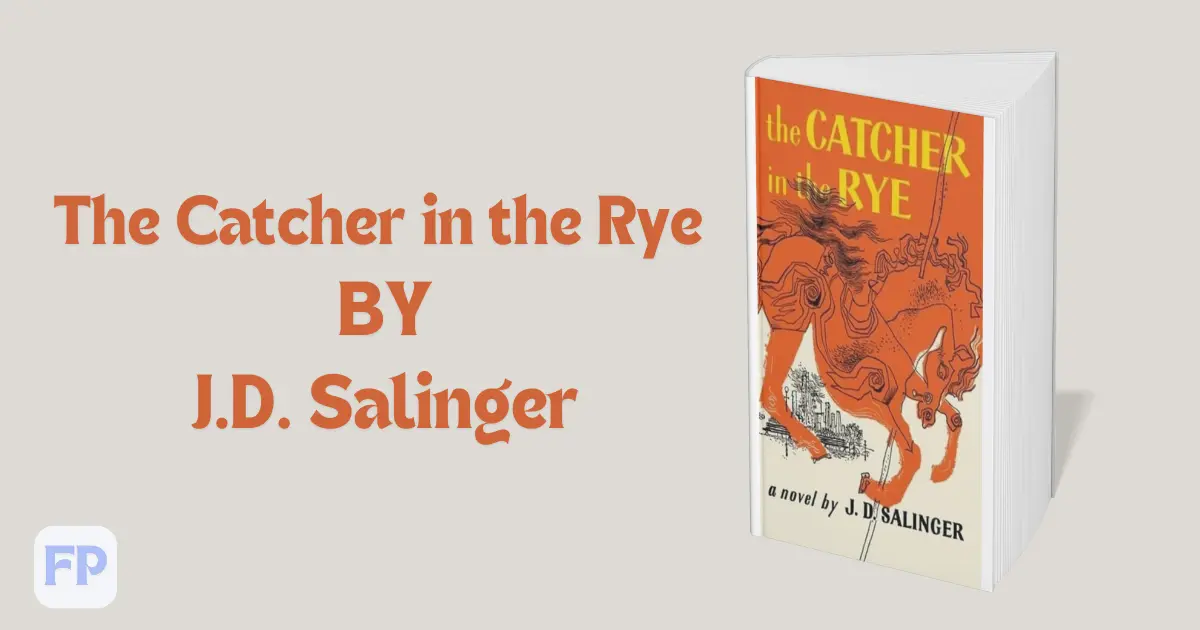
"The Catcher in the Rye" is a classic novel written by J.D. Salinger and published in 1951. This book has left an indelible mark on literature and popular culture, becoming a staple of middle and high school reading lists in the United States and beyond. Often celebrated for its authentic portrayal of teenage angst and alienation, the novel remains a poignant exploration of the challenges of adolescence and the yearning for authenticity in an often superficial world.
The story follows Holden Caulfield, a sixteen-year-old who is both the protagonist and unreliable narrator. As he recounts a series of events that take place over a few days between the end of the fall school term and Christmas, Holden's distinct voice captures the readers' attention and invites them into his world—a world marked by cynicism, confusion, and a desperate search for meaning.
Main Themes
Alienation as a Form of Self-Protection
Alienation is a prominent theme in "The Catcher in the Rye." Holden Caulfield uses his alienation as a protective barrier to prevent himself from being hurt. He constantly criticizes the phoniness of the people around him, which allows him to feel superior and isolated. By viewing himself as an outsider, Holden avoids the pain of rejection but simultaneously reinforces his loneliness and inability to connect genuinely with others.
The Painfulness of Growing Up
The novel candidly addresses the painful transition from childhood to adulthood. Holden struggles with this transformation, as seen through his deep-seated fear of change and the complex nature of adult life. His desire to be the "catcher in the rye" symbolizes his wish to preserve the innocence of childhood. Holden imagines himself saving children from the fall into adulthood's complexities and falsities, which he perceives as inevitable and destructive.
The Phoniness of the Adult World
Holden's disdain for the apparent phoniness of the adult world is a recurring motif throughout the novel. He perceives many of the adults he encounters as insincere, superficial, and hypocritical. This perception fuels his fear and resentment, underpinning his struggle to grow up. His cynical outlook shields him from the perceived insincerity of adulthood, yet it also blinds him to the value of complex human relationships.
Preservation of Innocence
Holden's desire to act as the "catcher in the rye" reflects his longing to preserve innocence, both in himself and others. The title of the novel is derived from a misinterpretation of Robert Burns' poem "Comin' Thro' the Rye," wherein Holden envisions himself saving children from falling off a cliff, which symbolically means saving them from losing their innocence and falling into adulthood.
Key Points
Plot Overview
-
Holden's Expulsion: The narrative begins with Holden being expelled from Pencey Prep, a prestigious private school. This is the fourth school from which he has been expelled due to failing academic performance.
-
Journey to New York: Rather than returning home to his parents immediately, Holden travels to New York City, seeking solace and adventure. He embarks on a journey through the city, filled with encounters that highlight his inner turmoil.
-
Encounters and Observations: Throughout his time in New York, Holden interacts with various people—old acquaintances, strangers, and family—that deepen his sense of alienation. His experiences in bars, hotels, and public spaces amplify his criticism of adult behavior.
-
Holden's Relationships: Key relationships in the novel include Holden's interactions with his younger sister Phoebe, his former teacher Mr. Antolini, and his deceased younger brother Allie. His bond with Phoebe is particularly poignant, as she represents the innocence Holden so desperately wants to protect.
-
Mental Struggle and Resolution: As Holden's mental state deteriorates, his narrative becomes increasingly erratic, culminating in an emotional breakdown. His ultimate realization, arriving upon witnessing Phoebe on a carousel, marks the beginning of his acceptance of life's complexities.
Character Analysis
-
Holden Caulfield: As the protagonist, Holden is a complex juxtaposition of critical observation and deep sensitivity. His continual struggle with identity and belonging makes him a timeless character resonating with readers grappling with their own existential questions.
-
Phoebe Caulfield: Holden's younger sister, Phoebe, symbolizes innocence and genuine connection. Her insights often reveal a clarity and maturity that Holden respects and cherishes, making her a pivotal figure in his narrative.
-
Mr. Antolini: One of Holden's former teachers, Mr. Antolini offers care and guidance but is also involved in a controversial moment, causing Holden to question the intentions of adults and deepening his distrust.
Conclusion
"The Catcher in the Rye" remains an enduring literary masterpiece due to its exploration of universal themes such as alienation, the fear of growing up, and the quest for authenticity. J.D. Salinger's novel artfully captures the intricacies of adolescent life, offering a powerful examination of identity and self-discovery.
Through Holden Caulfield's journey, readers are invited to reflect on their own experiences with innocence, identity, and the often-complicated transition into adulthood. Although society and times have changed since its publication, the novel's essence continues to resonate, encouraging generations to introspect on personal and societal values.