
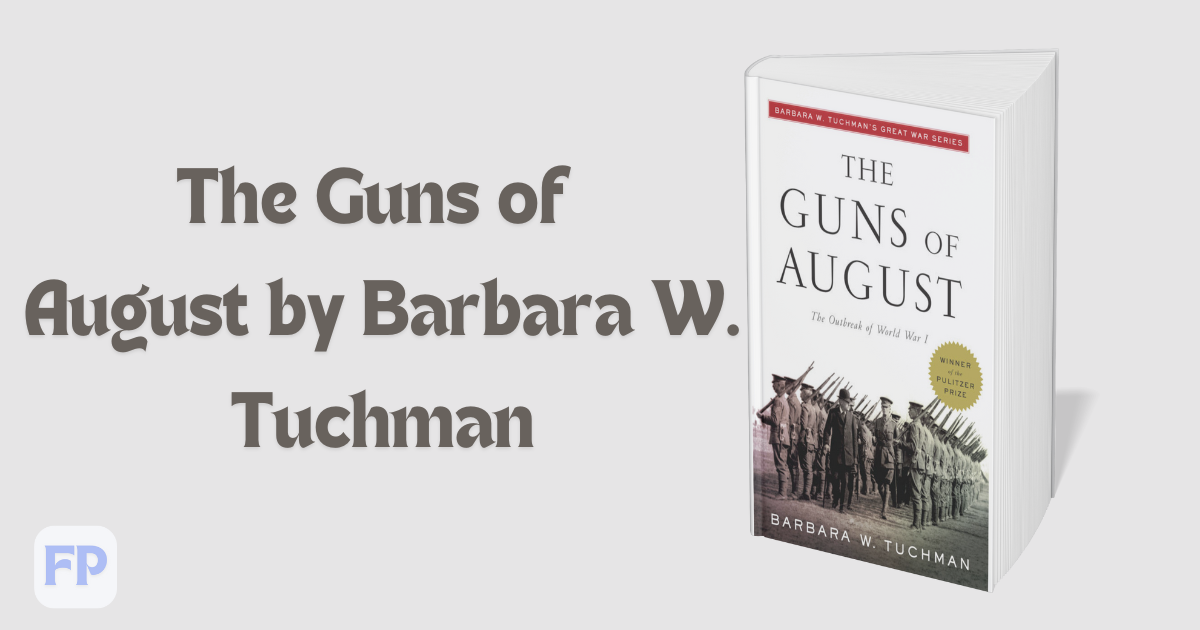
The Guns of August by Barbara W. Tuchman - Book Summary
Introduction
"The Guns of August" is a historical narrative written by the renowned historian Barbara W. Tuchman. Published in 1962, the book meticulously chronicles the events leading up to and the first month of the First World War—specifically August 1914. Tuchman's work is celebrated for its vivid storytelling and comprehensive analysis of the complex web of political and military maneuvers that marked the dawn of the 20th century's most devastating conflict. Her narrative shines a light on the decisions of the key players, the misunderstanding and arrogance that propelled Europe toward war, and the unfolding impact of these events on the global stage.
In a departure from dry academic prose, Tuchman delivers a compelling and accessible account, making a significant contribution to historical literature. The Pulitzer Prize she received for this book underscores its enduring importance and the profound insight it offers into the genesis of modern warfare.
Main Themes
The Inevitability of War
A central theme in Tuchman's narrative is the idea of the inevitability of war. Through a series of diplomatic failures and misunderstandings, the author depicts how the war seemed almost preordained by the complex system of alliances, militaristic advances, and nationalistic fervor of the time. The narrative illustrates how leaders, driven by ambitions and insecurities, miscalculated the consequences of their actions, often viewing the prospect of war as a means to assert power or settle enduring rivalries.
The Role of Leadership
Leadership, or the lack thereof, is another pivotal theme throughout the book. Tuchman delves into the personalities and decisions of the era’s key leaders, detailing how their choices shaped the early course of the war. From Germany's Kaiser Wilhelm II to France's General Joffre, each leader is portrayed with their strengths, weaknesses, and the sometimes myopic vision that led them into conflict.
Militarism and Strategy
The book explores the relentless march of militarism and strategic thinking that characterized the pre-war period. Tuchman examines the strategies of the European powers, most notably the infamous Schlieffen Plan employed by Germany, which aimed for a swift victory by invading France through Belgium. The emphasis on military preparedness and the anticipation of short-term victories stark contrasts with the horrific reality that unfolded.
The Consequences of Miscommunication
Miscommunication and the breakdown of diplomacy are crucial elements in Tuchman's analysis. Despite multiple opportunities to halt the escalation, the failure to communicate effectively contributed heavily to the onset of war. Tuchman highlights how encrypted telegrams, misunderstood intentions, and diplomatic blunders played instrumental roles in speeding up Europe’s descent into chaos.
Key Points
The Prelude to Conflict
- Assassination of Archduke Franz Ferdinand: The book begins with the assassination in Sarajevo, an event that set off a cascade of political responses. While initially not seen as a reason sufficient for war, it soon became the catalyst.
- Complex Alliance System: Tuchman elucidates the tangled web of alliances across Europe—Triple Entente versus Triple Alliance—which set the stage for a broader conflict.
The Mobilization
- Germany's Strategic Calculations: Germany found itself in a precarious position, sandwiched between France/England and Russia. The Schlieffen Plan was a risky gamble to defeat France quickly before turning eastward.
- France's Defensive Strategies: France mobilized with a focus on reclaiming lost provinces and protecting Paris, fueled by a blend of patriotism and military necessity.
The Invasion of Belgium
- German Violation of Belgian Neutrality: One of the early dramatic confrontations was Germany's invasion of Belgium. This breach of neutrality provoked outrage and solidified British intervention.
- Belgium’s Resistance: Despite being severely outmatched, Belgian forces put up a notable resistance that delayed German progress and affected the operational timeline of the Schlieffen Plan.
The Battle of the Frontiers
- French Offensive Failures: France’s heavy losses in its misguided offensives against Germany highlighted the initial flaws in their military strategy.
- Germany's Initial Success and Setbacks: While initially successful, the German advance was eventually halted due to logistical issues and the unforeseen stalwart defense by the Allies.
The Miracle of the Marne
- Allied Counterattacks: The Allies, under new leadership and reorganized lines, launched a counterattack at the Marne, which stemmed the German advance and marked a significant psychological and strategic victory.
- Turning Point: This battle essentially dashed German hopes for a swift victory, signaling the start of a protracted and grueling war of attrition.
Political and Social Impacts
- Outpouring of Patriotism: The outbreak of war unleashed a swell of nationalistic fervor across Europe, leading to enlistment in unprecedented numbers.
- Transformation of Warfare: The introduction of new technologies and tactics, such as trench warfare and machine guns, began to redefine the battlefield.
Conclusion
"The Guns of August" serves as a profound reminder of the fragility of peace and the sometimes-inevitability of conflict when diplomacy fails and leaders are consumed by hubris. Barbara W. Tuchman's vivid storytelling and insightful analysis grant the reader a comprehensive understanding of the factors that led the world into one of its darkest eras. The book not only highlights the historical events of August 1914 but also provides enduring lessons on leadership, strategy, and the human cost of war.
Tuchman’s work remains a significant contribution to historical literature by offering a compelling narrative that captures the intricate and often chaotic decision-making that propelled nations into war. Her examination is not merely academic but serves to engage the reader emotionally, urging a reflection on the costs of military conflicts that reverberate through history.
As we look back on the tragedies of the past, "The Guns of August" continues to resonate, reminding us of the ever-present need for diplomacy, understanding, and the careful consideration of the profound impacts that decisions of war can herald for humanity.