
The One Minute Manager - Book Summary
Introduction
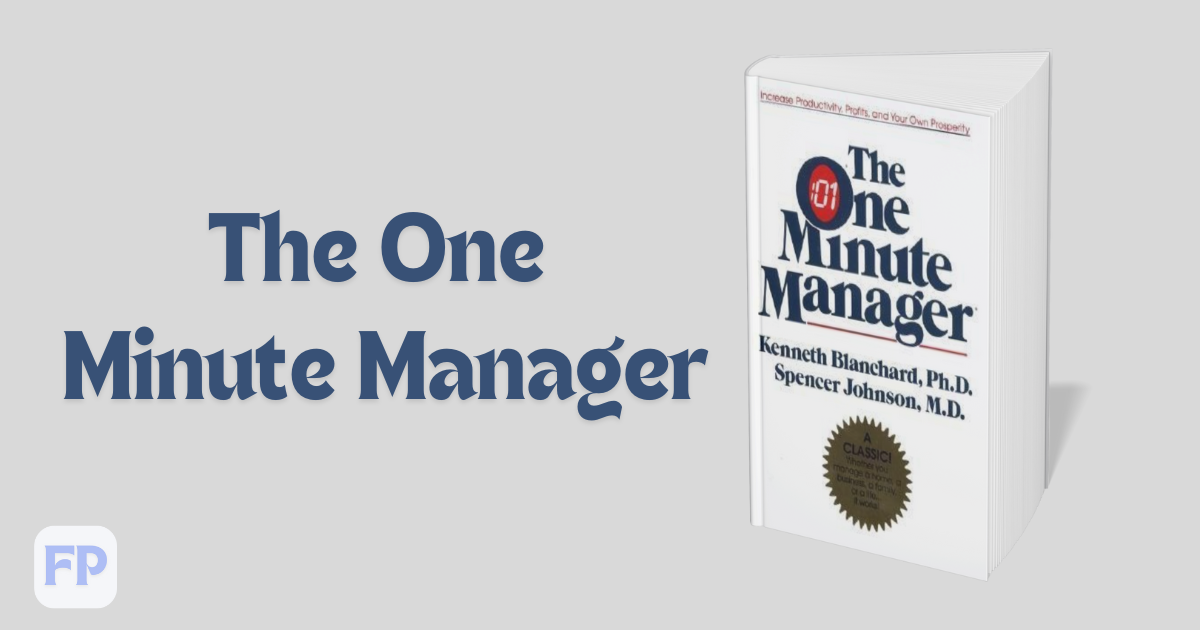
"The One Minute Manager" by Kenneth H. Blanchard and Spencer Johnson is a seminal work in the field of management literature, offering practical advice on effective leadership and management strategies. The book introduces readers to the concept of the One Minute Manager, a character who exemplifies a simple yet efficient management style. The principles discussed are designed to enhance productivity and foster positive workplace dynamics. This summary explores the main themes, key concepts, and practical applications discussed in the book.
Main Themes
Simplicity in Management
A central theme of "The One Minute Manager" is the power of simplicity in management practices. The authors advocate that complex managerial strategies often lead to confusion and inefficiency. Streamlined approaches, such as the techniques employed by the One Minute Manager, are both more effective and less time-consuming.
Balance Between Results and Human Relations
Another significant theme is balancing organizational objectives with the need for strong interpersonal relationships. The book emphasizes that focusing solely on results can damage team morale, while ignoring results can lead to failure. The One Minute Manager achieves high productivity by nurturing positive relationships while maintaining a results-oriented outlook.
Empowerment through Feedback
The One Minute Manager focuses on the empowerment of employees through regular and constructive feedback. Providing clear guidelines and immediate feedback helps employees understand expectations, grow in their roles, and contribute to organizational success. This theme underscores the importance of communication and feedback in leadership.
Key Points
The Three Secrets of the One Minute Manager
The One Minute Manager is structured around three core strategies known as The Three Secrets. These secrets are designed to help managers become more effective leaders through concise, goal-oriented practices.
1. One Minute Goals
One Minute Goals involve setting clear, concise objectives that can be completed in a short amount of time. The process includes the following steps:
-
Setting Goals Together: The manager and employee agree on the desired outcome. This fosters engagement and commitment from the employee.
-
Writing Goals Briefly: Goals are limited to a single page, which can be read in about a minute. This ensures clarity and focus.
-
Reviewing Regularly: Goals are regularly reviewed, typically once a day, to ensure they remain aligned with business objectives and employee capabilities.
The essence of One Minute Goals is to provide clarity, encourage accountability, and reduce miscommunication.
2. One Minute Praisings
One Minute Praisings are about instantaneously recognizing and rewarding employees when they do something right. This approach comprises:
-
Immediate Feedback: Offering praise as soon as the manager notices good behavior or performance enhances its impact.
-
Specific Acknowledgment: Clearly stating what the employee did well, which behavior is valued and should be repeated.
-
Emotional Sharing: Letting employees know how their performance positively affects the manager and the team creates a sense of accomplishment.
The goal of One Minute Praisings is to boost morale, reinforce desired behaviors, and cultivate a culture of continuous improvement.
3. One Minute Reprimands
One Minute Reprimands are meant to correct behavior quickly and effectively while preserving the employee's dignity. They are executed by:
-
Immediate Correction: Addressing the issue right away to prevent further derailment of progress.
-
Focus on Behavior: Clearly explaining what went wrong without attacking the employee's character.
-
Affirmation: Reassuring employees of their value to the team after the reprimand, fostering confidence and motivation for improvement.
One Minute Reprimands help to correct undesirable behavior without creating resentment or damaging relationships.
Practical Application of the Secrets
The book also delves into how these three secrets can be adapted to various business environments and roles. By incorporating these practices, managers can achieve a high level of performance with minimal waste of time. The authors advocate for:
-
Daily Implementation: Using these techniques regularly, managers can maintain control over their time while developing their team's performance and skills.
-
Tailoring to Individual Needs: Recognizing that different employees have different needs and adapting management style accordingly.
-
Creating a Positive Culture: Developing an organizational culture where feedback is consistent, constructive, and geared towards improvement.
Conclusion
"The One Minute Manager" presents a profound approach to effective management that is both simple and impactful. Through the principles of One Minute Goals, One Minute Praisings, and One Minute Reprimands, the book equips managers with tools to enhance productivity and establish a positive work environment. While the concepts may seem deceptively simple, their power lies in consistent application and the balance of human relations with organizational results. This work remains influential because it provides actionable insights that can be employed across industries and organizational structures, making managers more effective leaders and contributors to their team's success.