
Wuthering Heights by Emily Brontë - Book Summary
Introduction
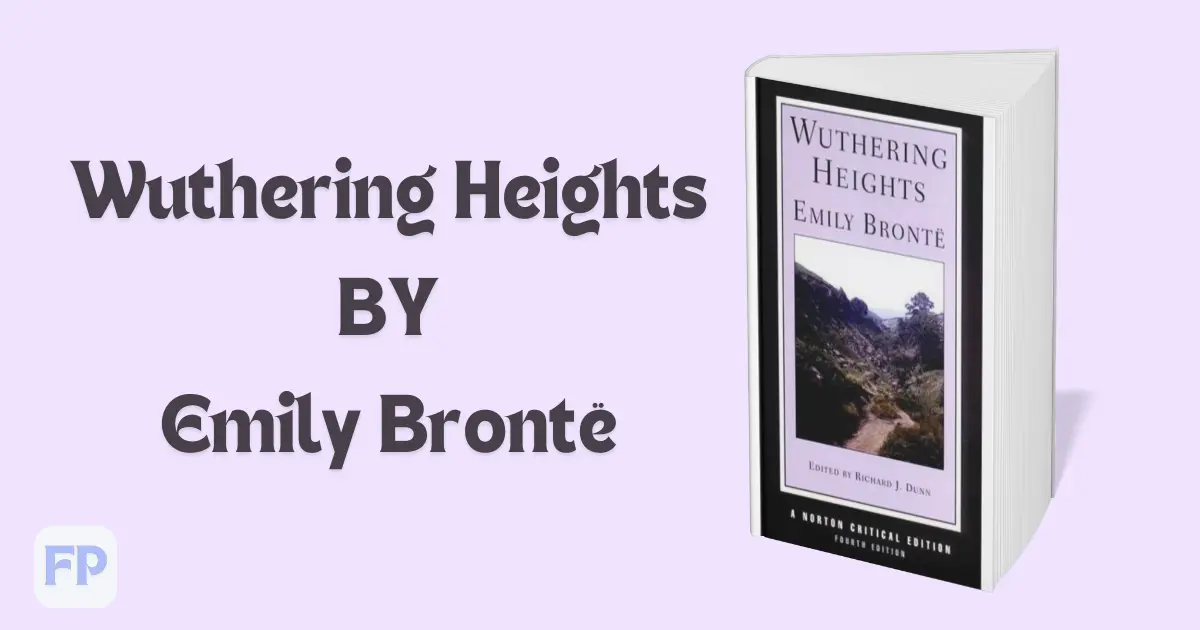
Wuthering Heights, a timeless masterpiece by Emily Brontë, was first published in 1847 under the pseudonym "Ellis Bell." The novel, set against the bleak and rugged backdrop of the Yorkshire moors, delivers an intense exploration of passion, revenge, and the destructive nature of love. With its intricate narrative structure and gothic overtones, Wuthering Heights has captivated readers for generations and remains a cornerstone of classic English literature.
Narrative Structure
Dual Narratives
The story unfolds through a unique narrative framework featuring two primary voices: Mr. Lockwood, a newcomer to the moors, and Nelly Dean, a housekeeper intimately familiar with the tale. This multi-layered storytelling technique grants readers an eyewitness perspective while also creating a sense of distance from the core events, adding to the enigmatic aura of the novel.
Gothic Elements
Brontë weaves a gothic tapestry throughout the narrative, invoking a chilling atmosphere filled with stormy weather, haunted settings, and spectral elements. This atmospheric quality underscores the novel’s darker themes and adds an otherworldly dimension to the characters' tumultuous lives.
Main Themes
Passionate Love and Obsession
At the heart of Wuthering Heights lies an intense, often destructive love between Heathcliff and Catherine Earnshaw. Their connection, characterized by both passionate loyalty and unyielding obsession, transcends conventional romance, suggesting a spiritual union that defies social norms and even death. This aspect of their relationship stands as both a testament to the power of love and a warning of its potential to consume and destroy.
Revenge and Retribution
Heathcliff’s journey through the novel is driven by an all-consuming quest for revenge against those who wronged him—primarily the Earnshaw and Linton families. The cyclical nature of his vengeance unfolds tragically, impacting generations and illustrating the futility and corrosive power of harbored resentment.
Social Class and Inequality
The novel also examines the rigid social hierarchy of the 18th-19th century England. Heathcliff’s ambiguous origins and subsequent rise and fall elucidate the era's class prejudices and constraints, highlighting how societal status can dictate one’s path and relationships.
Nature vs. Culture
The setting itself—wild moors vs. cultivated gardens—serves as a metaphor for the conflict between untamed passions and societal expectations. Characters often reflect or are shaped by their surroundings, illustrating a dynamic interplay between nature and culture.
Key Characters
Heathcliff
The central anti-hero, Heathcliff, is characterized by his intense, often opaque motives, brooding nature, and profound sensitivity hidden beneath layers of cruelty. As an orphan discovered on the streets of Liverpool, his ascent to power showcases both a calculated intellect and a heart embittered by unrequited love and maltreatment.
Catherine Earnshaw
Catherine embodies the conflict between affection and social duty, as her love for Heathcliff is unbounded yet insufficient to surpass her ambition for a comfortable, respectable life. Her marriage to Edgar Linton—a decision borne out of convenience and societal pressures—ultimately leads to her downfall.
Edgar Linton
Catherine’s husband, Edgar, represents cultivated civility and genteel sophistication. His gentle demeanor contrasts sharply with Heathcliff's rawness, and his inability to understand Catherine’s passionate nature contributes significantly to the story’s tragic progression.
Isabella Linton
Isabella falls victim to the destructive force of her infatuation with Heathcliff. Her impulsive decision to marry him results in a life marred by cruelty and despair, illustrating Brontë’s critique of romantic idealism.
Young Catherine and Hareton
The next generation, represented by Young Catherine (Catherine's daughter) and Hareton Earnshaw, echoes the preceding tumult yet offers glimmers of hope and redemption. Through their growing understanding and affection, Brontë suggests the possibility of breaking free from the cycle of vengeance and heartache.
Major Plot Points
Heathcliff’s Arrival and Integration
Found and brought to Wuthering Heights by the family patriarch Mr. Earnshaw, Heathcliff's early presence disrupts the Earnshaw household. While initially beloved, he soon becomes the target of Hindley Earnshaw’s jealousy and resentment, setting the stage for future conflicts.
The Separation of Heathcliff and Catherine
Their intense childhood bond ruptures as they mature and societal expectations intercede. Catherine’s choice to marry Edgar, whom she views as socially appropriate, leaves Heathcliff heartbroken and vengeful, catalyzing his plan for retribution.
Heathcliff’s Return and Ascendancy
Years later, Heathcliff returns to the moors wealthy and seeking vengeance. His calculated manipulation of individuals and marriages results in the deterioration and eventual control of both Wuthering Heights and Thrushcross Grange.
Catherine’s Untimely Death
Catherine’s health deteriorates as emotional torment takes its toll. She dies shortly after giving birth to her daughter, though not before a powerful final reunion with Heathcliff, who is left to grapple with the physical loss of his spiritual counterpart.
The Cycle of Revenge and Redemption
Heathcliff’s insatiable effort to sustain his grudge leads to the ruin of those around him, culminating in his own demise. However, the burgeoning relationship between Young Catherine and Hareton suggests a potential end to the cycle of cruelty and redemption, symbolizing a hopeful future amidst the shadows of the past.
Conclusion
Wuthering Heights remains a profound exploration of the complexities of human emotion, marked by unparalleled passion and destruction. Brontë’s novel challenges conventional narratives of love and morality, diving deep into the abyss of human nature and the societal constructs that bind us. Through its spellbinding characters and elemental setting, Wuthering Heights delivers an enduring commentary on love, revenge, and redemption that continues to resonate with readers worldwide.
In sum, Emily Brontë’s novel speaks powerfully to the enduring human struggle between desire and duty, freedom and restraint, and the haunting allure of the untamed wilderness—both within us and around us.