
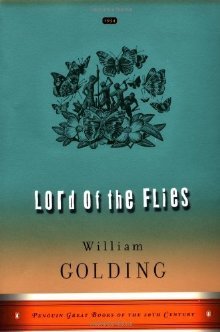
| Book name: | Lord of the Flies (2024) |
| Category: | Fiction |
| Author: | William Golding |
| Pages: | 182 pages |
| ISBN13: | 0140283331 |
| ISBN: | 0140283331 |
| Language: | English |
| Publication data: | Oct. 1, 1999, 7 a.m. |
Title: Lord of the Flies
Author: William Golding
Introduction:
"Lord of the Flies" is a profoundly gripping novel written by Nobel Prize-winning author William Golding. Published in 1954, the book has enthralled readers with its chilling portrayal of human nature and societal breakdown. Set against the backdrop of a deserted tropical island, it intricately explores the darkest corners of human psychology through the lens of a group of British boys stranded without any adult supervision. The novel is seminal in its discussion of civilization versus savagery, delving into what happens when societal norms collapse, leaving room for primal instincts to take over.
Main Themes:
"Lord of the Flies" is rich with symbolism and thematic depth, delving into several critical themes that interrogate the essence of humanity. One of the most prominent themes is the conflict between civilization and savagery, representing the duality of human nature. The island becomes a microcosm for the world, where the boys' initial attempts at organized society gradually devolve into chaos and barbarism. Another significant theme is the loss of innocence. As the boys oscillate from civilized behavior to primitive savagery, readers witness the disintegration of innocence in the face of power struggles and base instincts. Furthermore, the novel examines the power structures, leadership dynamics, and the battle between the human impulse toward order and governance versus the will to unleash anarchy.
Key Points:
As the narrative unfolds, we follow a group of boys, initially elated by the absence of adult supervision, as they attempt to govern themselves. The protagonist, Ralph, alongside his ally Piggy, represents order and democracy. They endeavor to maintain structure with the use of a conch shell, a symbol of authority and communication. In stark contrast, the antagonist Jack embodies primal instinct, seeking power and control through fear and violence. As tensions escalate, the fragile semblance of order collapses, leading to a heart-pounding climax where the remaining semblance of innocence is irretrievably lost. Interwoven with allegory and symbolism, characters and objects in the novel, such as the "beast," the fire, and Piggy's glasses, serve as metaphors for broader social and moral questions.
"Lord of the Flies" has been widely praised for its unflinching depiction of the potential for darkness that resides within all humans when stripped of societal constraints. Golding's masterful storytelling compels readers to confront unsettling truths about their nature, making them consider the fine line between civilization and chaos. Throughout the story, the eerie ambiance and escalating tension captivate the reader's imagination, making it a compelling read that is as relevant today as it was in the mid-20th century. The harrowing descent into disorder challenges readers to ponder the essence of society, the inherent flaws in humanity, and the lingering question: without society's chains, are we savage at heart? Golding's intuitive exploration into these profound questions contributes to the novel’s enduring place within the literary canon.