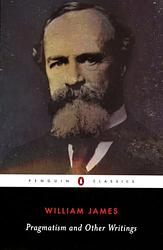
The book in question is a seminal work in the philosophical tradition of pragmatism, which argues that the truth of ideas is measured not by their correspondence to an objective reality, but by their practical effects and utility. The author challenges the notion of fixed, absolute truths, proposing instead that beliefs should be seen as tools for action and that their validity depends on their success in solving problems and guiding experiences. Through a series of lectures, the text explores the implications of this philosophy for various fields, including religion, metaphysics, and science, ultimately advocating for a more flexible, open-ended approach to thinking and a tolerance for diverse perspectives in the pursuit of knowledge and understanding.
The 1405th greatest book of all time