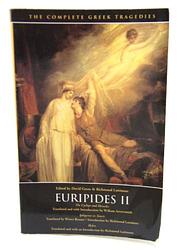
"Cyclops" is a satyr play that blends elements of comedy and tragedy, drawing from the mythological encounter between Odysseus and the titular one-eyed giant. The narrative follows Odysseus and his men as they become trapped in the cave of the Cyclops, a savage and uncivilized creature. Employing wit and cunning, Odysseus devises a plan to intoxicate the monster with wine and blind him, securing an escape for himself and his crew. The play explores themes of intelligence versus brute force, the struggle for survival, and the clever triumph of human ingenuity over monstrous barbarism.
The 11232nd greatest book of all time
Euripides (Greek: Ευριπίδης) (ca. 480 BC–406 BC) was a tragedian of classical Athens. Along with Aeschylus and Sophocles, he is one of the three ancient Greek tragedians for whom any plays have survived in full. Some ancient scholars attributed ninety-five plays to him, but the Suda says it was ninety-two at most. Of these, eighteen or nineteen have survived more or less complete (Rhesus is suspect). There are many fragments (some substantial) of most of his other plays. More of his plays ha…
Read more