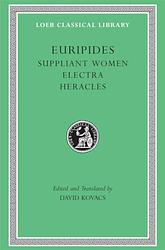
The play centers on the tragic hero Heracles, who, upon returning home from his labors, discovers that his wife and children are about to be executed by a tyrant who has usurped his throne. In a cruel twist of fate, Heracles is driven mad by the goddess Hera and, in his insanity, slays his own family, believing them to be his enemies. Upon regaining his sanity and realizing the horror of what he has done, Heracles is confronted with the unbearable weight of his actions and the loss of his family, leaving him to grapple with his guilt and the question of how to continue living after such a catastrophe.
The 10781st greatest book of all time
Euripides (Greek: Ευριπίδης) (ca. 480 BC–406 BC) was a tragedian of classical Athens. Along with Aeschylus and Sophocles, he is one of the three ancient Greek tragedians for whom any plays have survived in full. Some ancient scholars attributed ninety-five plays to him, but the Suda says it was ninety-two at most. Of these, eighteen or nineteen have survived more or less complete (Rhesus is suspect). There are many fragments (some substantial) of most of his other plays. More of his plays ha…
Read more